In late April, the 2026 SEERNet Convening engaged 78 leaders on the topic of Digital Learning Platforms as Research Infrastructure: Reflecting on Progress and Scaling with Purpose. The convening featured both completed and in-progress research. Based on the accomplishments of the 33 presenters and others in attendance, the group envisioned how SEERNet's unconventional approach to educational Research and Development (R&D) could lead to broader impacts in educational research and development.
High Engagement Across Areas of Educational Expertise
The two-day convening brought together an extraordinary mix of leaders from across the education R&D industry, including:
digital learning platform (DLP) developers;
research teams from SEERNet and related efforts — AIMS Collaboratory and EduData Initiatives (funded by the Gates Foundation) and SafeInsights (funded by NSF);
learning scientists;
learning engineers;
methodologists;
state education agency (SEA) and local education agency (LEA) representatives;
industry partners;
and federal and philanthropic funders.
Following welcoming remarks from SEERNet Principal Investigator, Jeremy Roschelle, and leaders from the Institute of Education Sciences, the convening featured 33 coordinated presentations, including short 5-minute lightning talks, posters, and small group “expertise exchanges.” Participants shared study updates, emerging tools, methods, findings, and infrastructure developments. The convening also included working group sessions, a panel discussion, a keynote talk, and time in between to foster genuine conversation, collaboration, and connection.
There was a noticeable energy and excitement throughout the event, including a sense that people were eager not only to share their current work, but to collectively grapple with what comes next for the DLPs-as-research-infrastructure movement (what we refer to as DL PRIMo).The meeting was graciously hosted by the American Institutes for Research (AIR) at their headquarters overlooking Washington, DC.
On Day 1, small working groups — each with a mix of researchers, platform developers, funders, practitioners, technical experts, and partnership leaders—were asked to discuss the progress on current work, share their various perspectives, and begin to characterize a vision of the future of DL PRIMo. On Day 2, the groups were reconfigured, and were tasked with identifying bold next steps, along with required supports, anticipated challenges, and underlying motivations.
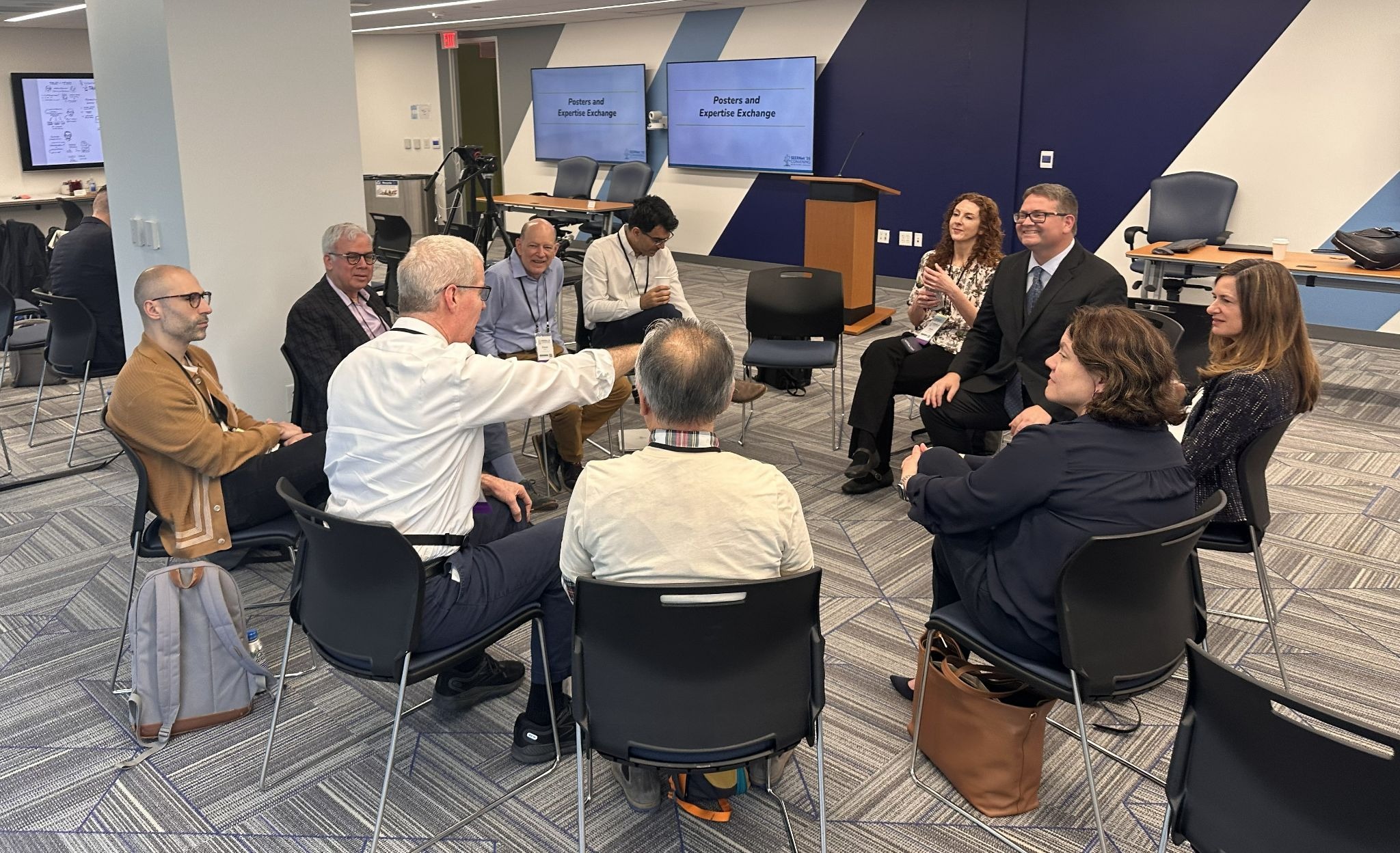
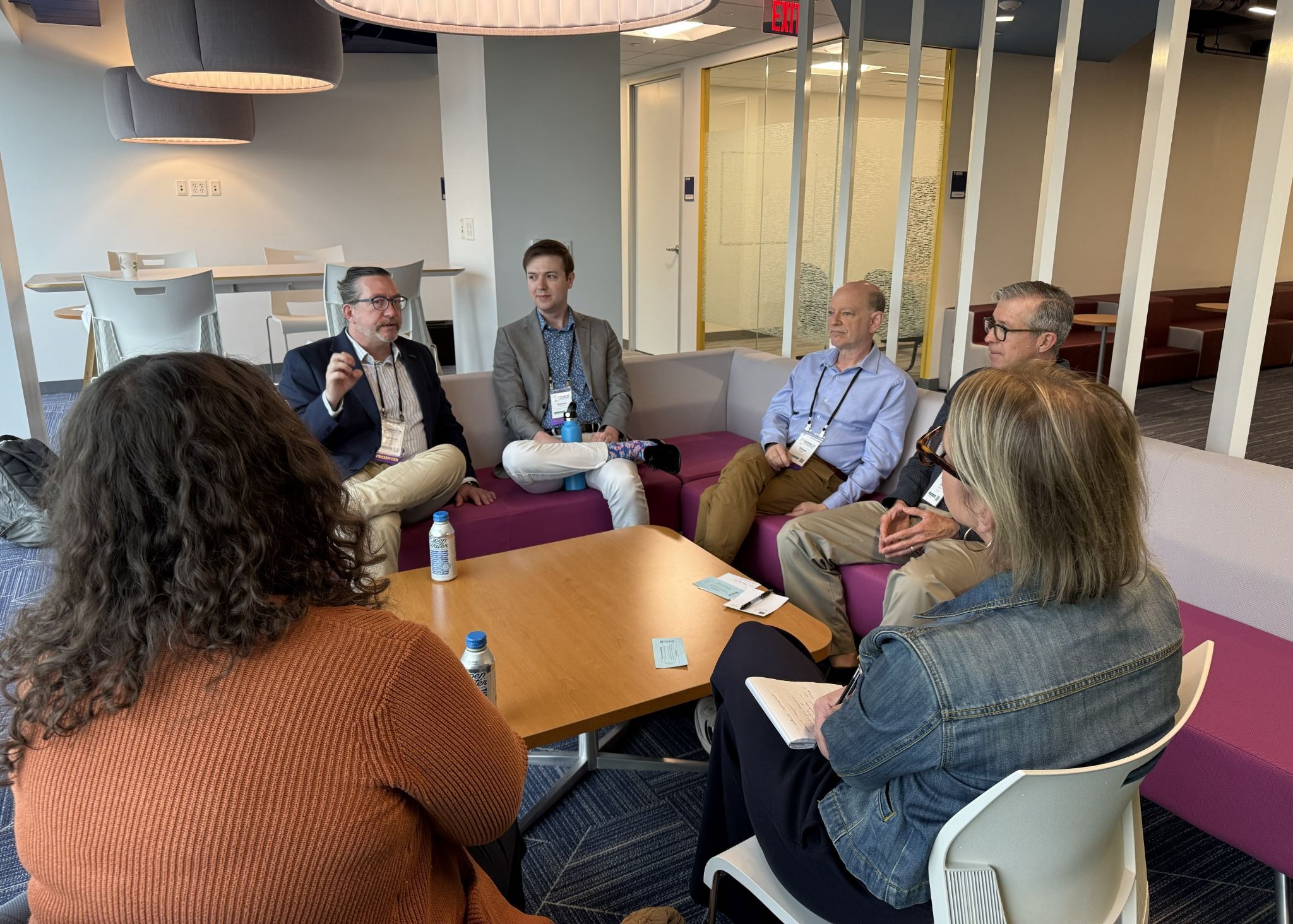
Expertise exchange sessions, where participants gathered in small groups to share work, compare approaches, and discuss emerging challenges across DLP-based research.
Lightning Talks and Posters Shared SEERNet’s Progress
The convening’s lightning talks from the SEERNet researchers underscored the core benefits of DLP-based research—larger samples, real-time behavioral data, and the ability to run scalable, embedded experiments in authentic learning environments. At the same time, the research teams surfaced recurring challenges, including data sharing agreements and governance constraints, variability in instructional implementation, learning curves associated with both platform use and data interpretation, and the complexity of working with “noisy” or highly contextualized data. Collectively, these researchers identified an ongoing opportunity for the community to refine shared infrastructure practices—such as creating standard MOUs, data request templates, and data dictionaries—to reduce study delays and also to continue to share “lessons learned” for the next group of researchers.
Following the lightning talks, the SEERNet DLPs presented posters showcasing their research infrastructure, including the types of studies and methods supported by their platforms, their available data sources, system architecture, and examples of past and ongoing projects. These posters gave convening attendees an opportunity to dig more deeply into each DLP-as-research-infrastructure and better understand how the different platforms operate and what kinds of research they are designed to support.
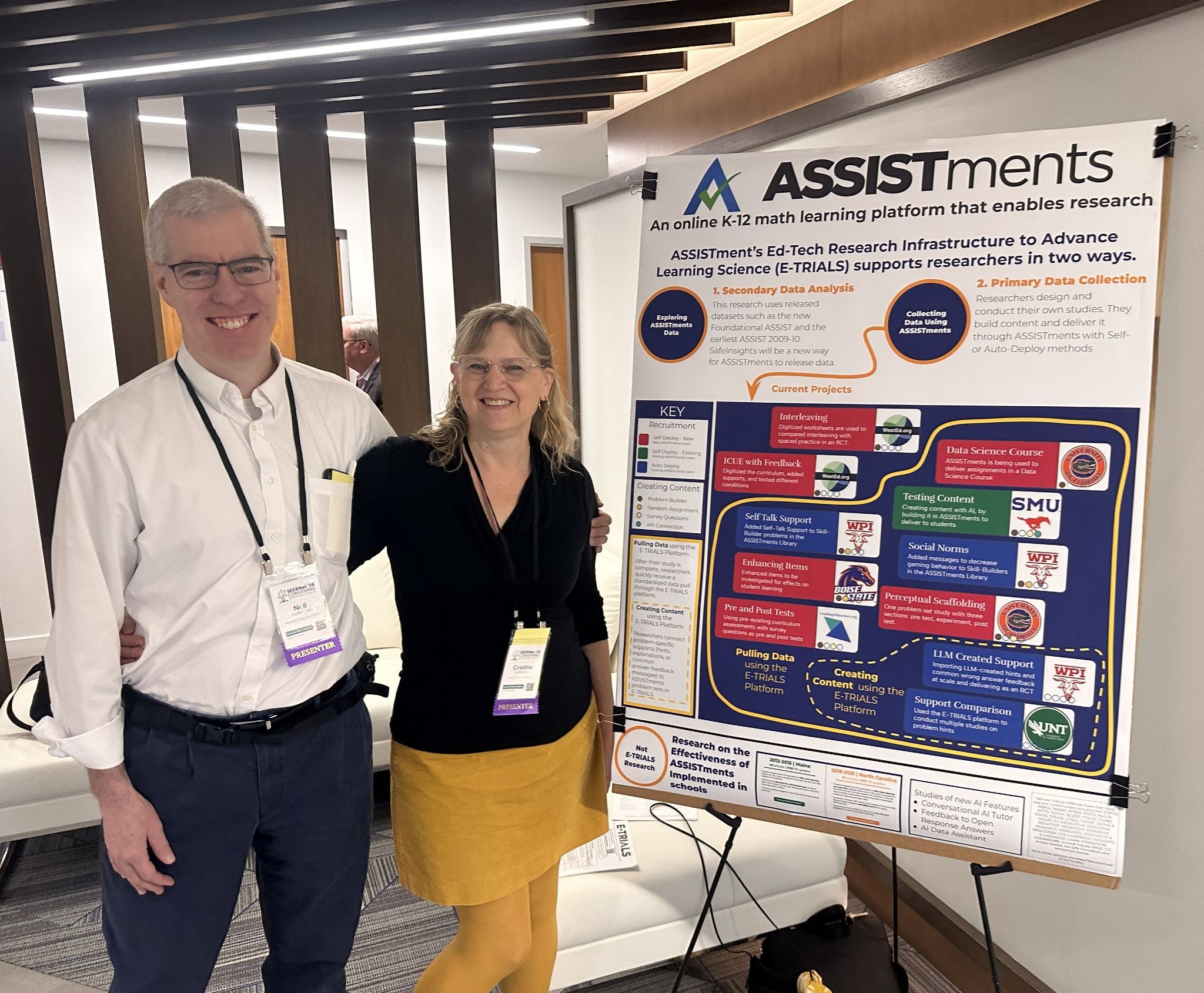
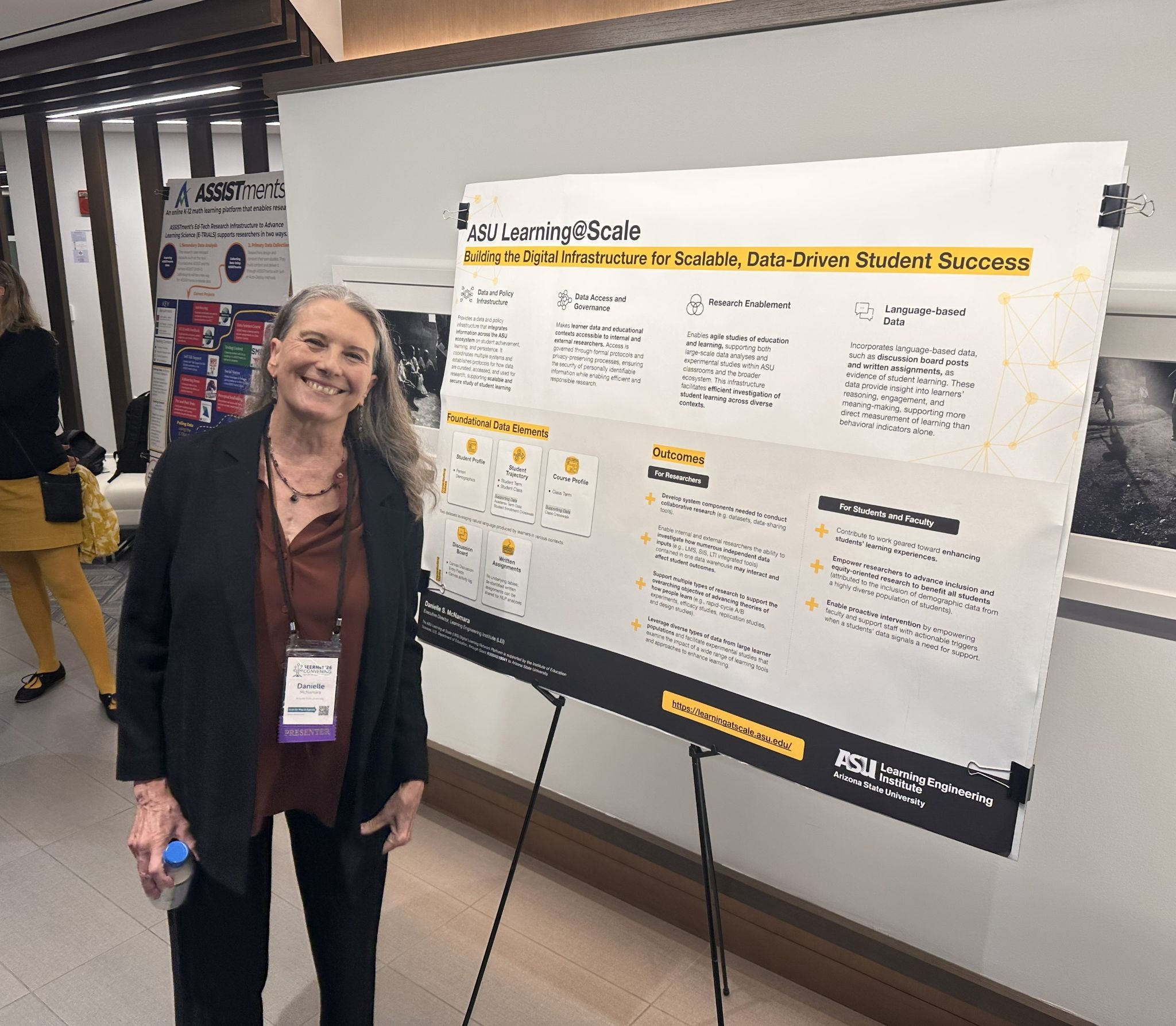
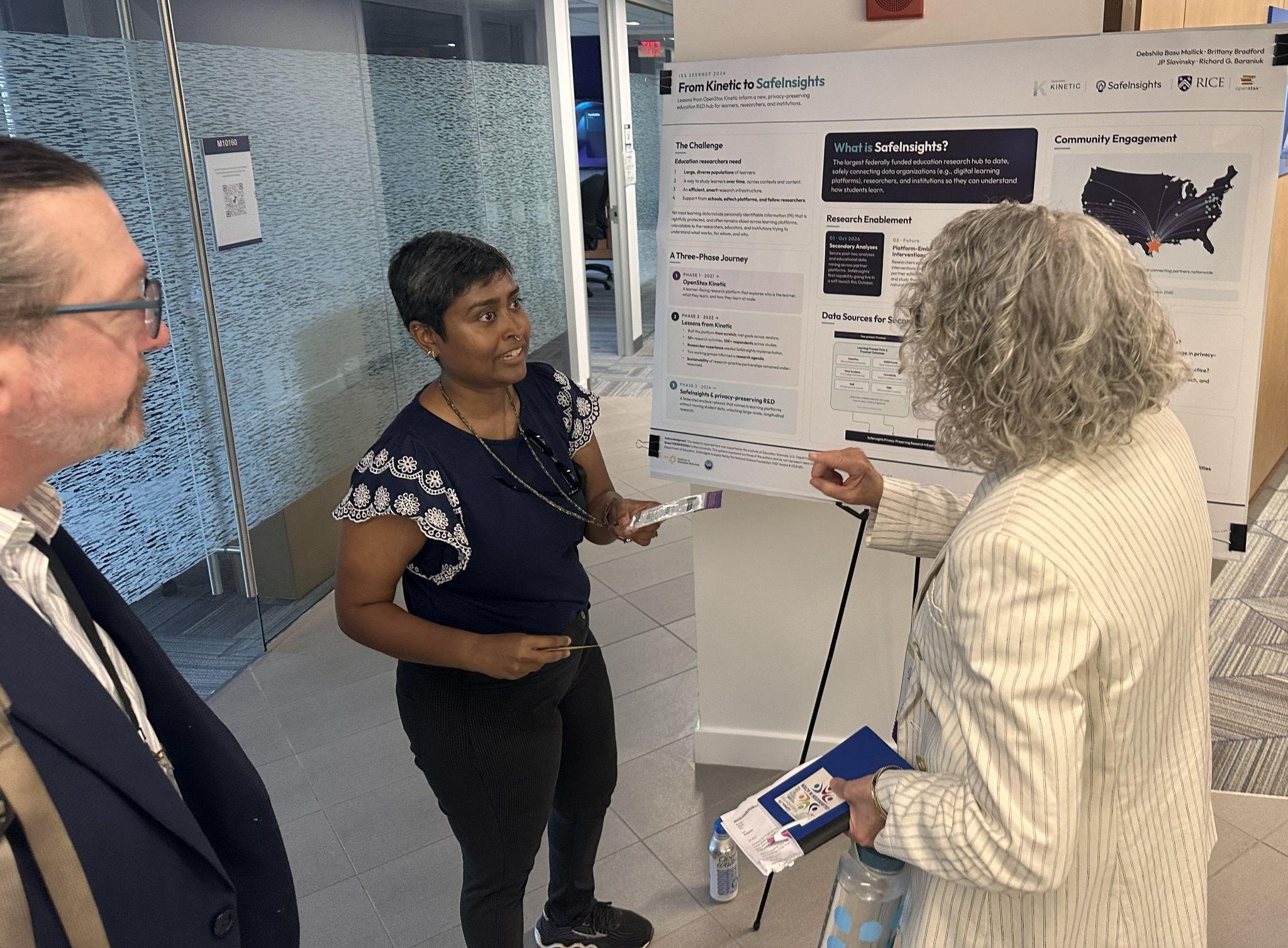
Poster sessions where SEERNet DLP teams shared their research infrastructure, highlighting study designs, data sources, system architecture, and examples of DLP-as-research-infrastructure in practice.
Engaging Practitioner Voice and Collective Reflection
The panel discussion, which featured perspectives from researchers and LEA representatives, focused on both the promise and limits of DLP-based research infrastructure: what kinds of research questions are best addressed, where gaps remain, and what it takes to build partnerships that are productive for researchers, practitioners, and platform developers. Additionally, practitioners gave passionate plenary talks about their perceptions of strengths and gaps in SEERNet's progress. We were also very fortunate to hear reflections on this work from leaders from IES and NSF who enriched the discussion by providing insight into current and emerging priorities, while also offering inspiration and agency to this growing community to continue to shape the research field to address important problems of practice.
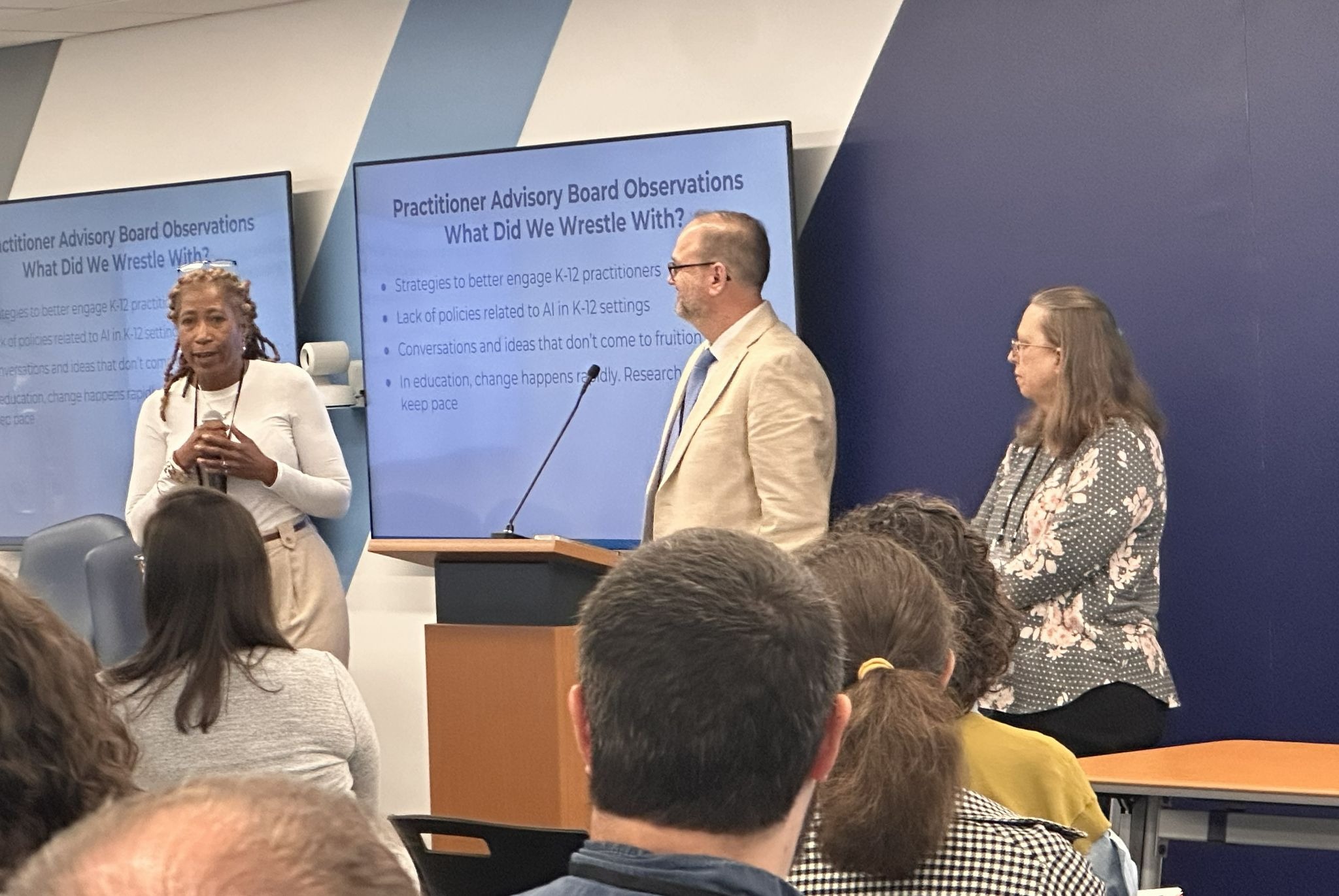
SEERNet Practitioner Advisory Board members addressing the full convening, offering reflections on the strengths of SEERNet’s work and areas for continued growth.
A highlight of the convening was a community-building activity during which our graphic illustrator, Manuel Herrera, drew portraits of participants as they shared what they were noticing, wrestling with, or taking away from the convening. These portraits and quotes became part of our community wall of reflections. One theme that came through in the illustrations and discussions is the importance of doing this work as a network and that progress depends on collective effort as much as individual contributions. Relatedly, the Day 2 “town hall” became less of a traditional discussion about future directions and more of a moment for participants to reflect on and show their appreciation for the collaboration that has developed over the past five years of SEERNet, and to recognize people’s contributions and impact.
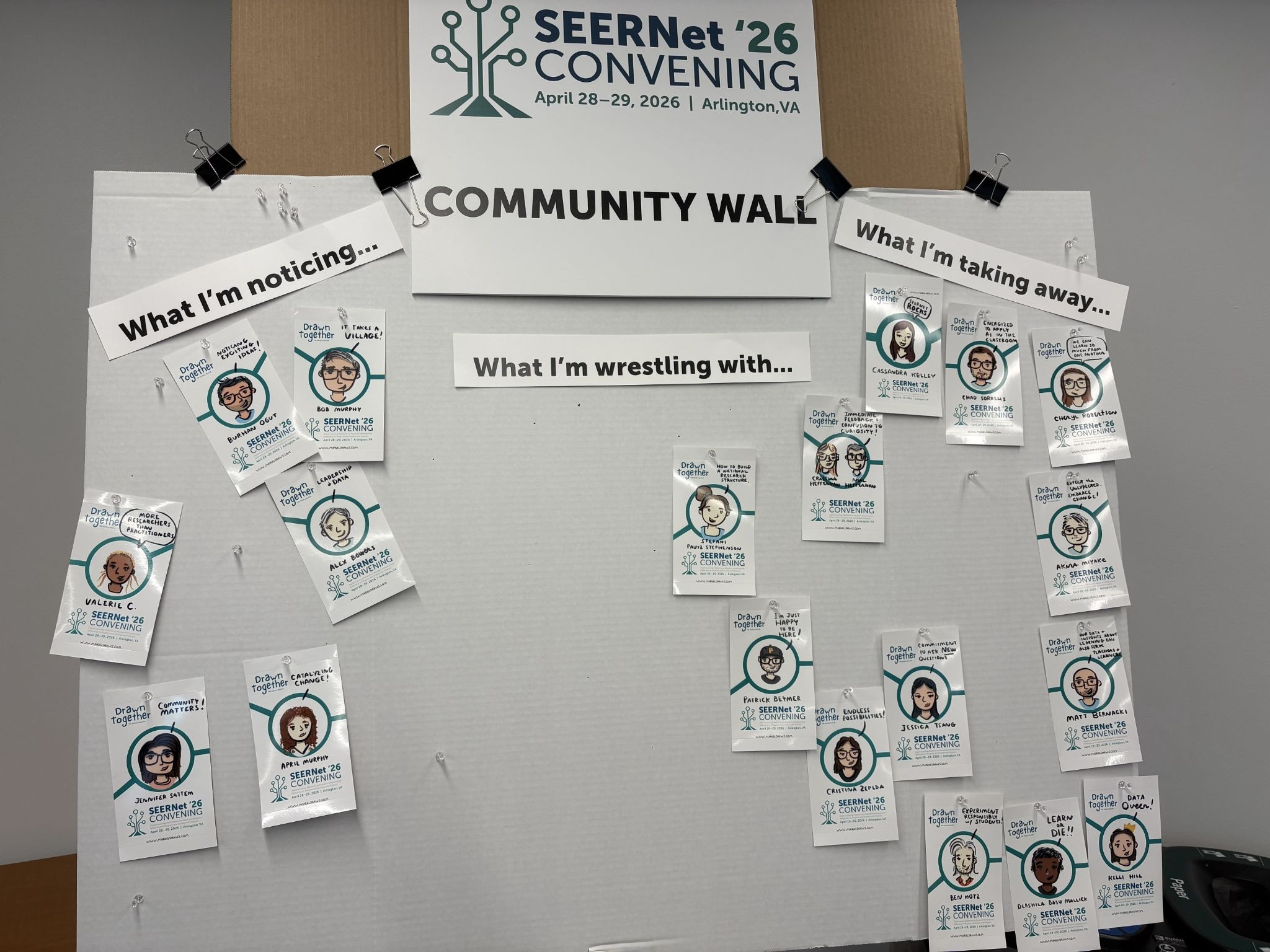
The community wall of reflections, featuring participant portraits, quotes, and observations captured throughout the convening.
Productive Tensions and Probing Questions
The convening also surfaced important and productive tensions. Participants brought very different perspectives to the rooms, and at times those differences created challenging but valuable conversations. Some attendees emphasized the importance of focusing on technical infrastructure: interoperable systems, data governance structures, scalable tools, and sustainable processes that can support research efforts at scale. Others pushed for deeper and more direct engagement with practitioners, states, and districts — arguing that infrastructure alone is insufficient if it is not grounded in the realities, constraints, and priorities facing educators and policymakers.
On the technical side, infrastructure builders and researchers are working together to adapt DLPs that were not originally designed for research into platforms that can support rigorous, timely evidence-building. Over the last five years, this community has made tremendous advancements in that work: platforms that were not initially architected for research are now being used to support participant recruitment, consent, random assignment, delivery of theory-driven interventions, and data collection. This is something to celebrate!
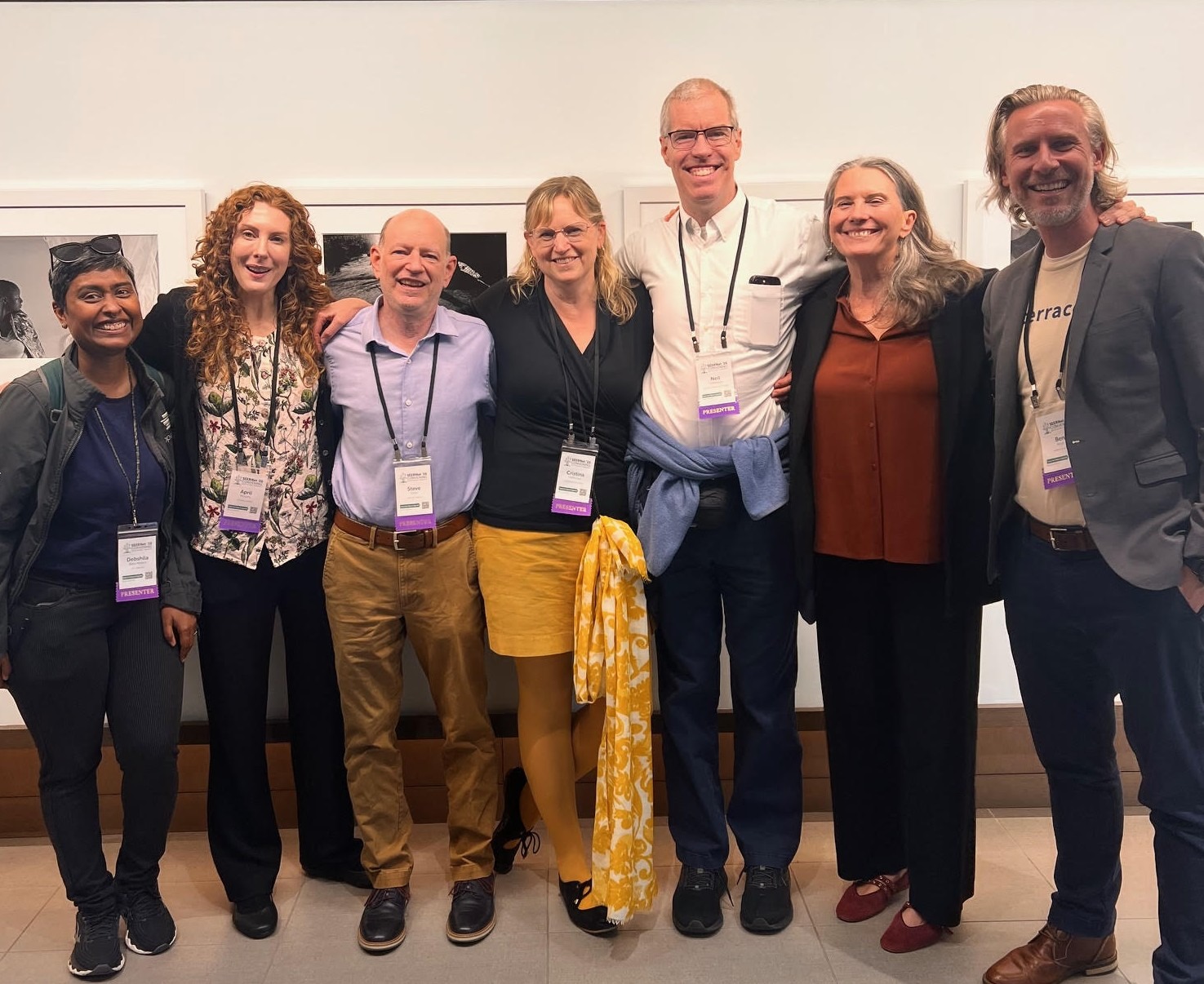
SEERNet DLP leaders whose platforms and partnerships have helped advance DLPs as research infrastructure over the past five years.
At the same time, the practitioner aspects of this work require continued engagement and attention. SEA and LEA leaders and practitioners played a critical role in keeping discussions grounded, consistently raising questions about whether and how the work is addressing the problems that matter most in practice. Challenges around data sharing agreements and Institutional Review Board processes continued to be raised. These challenges highlight that while technical infrastructure is advancing, the broader ecosystem needed to support this work still requires attention.
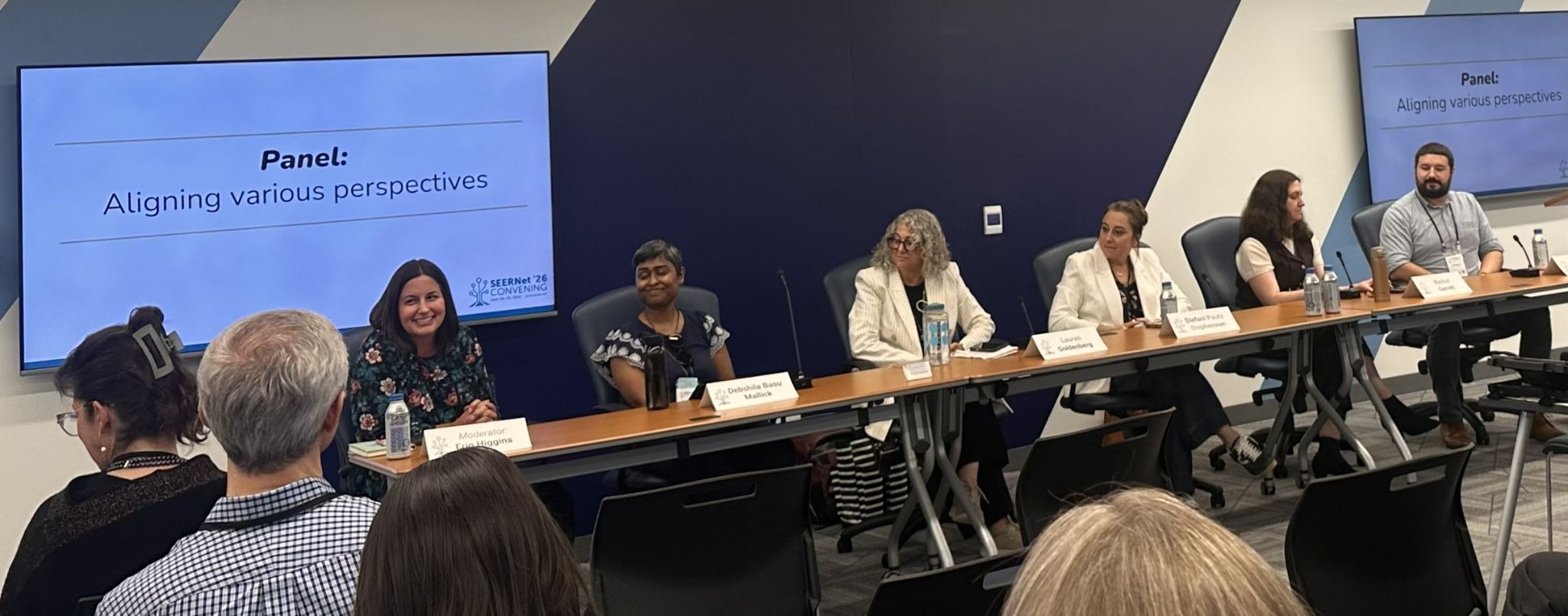
Panelists, including researchers and LEA representatives, discussed the promise and limits of DLP-based research infrastructure and what it will take to move the field forward.
The convening also surfaced important tensions around how partnerships are initiated and funded. Participants discussed different models, including LEA-led approaches where districts define problems and bring in platform and research partners, and DLP-led approaches where platforms build research capacity first and then engage districts. Each comes with tradeoffs. DLPs raised concerns about being asked to pivot in ways that may not align with their design or scale, while LEAs pointed out that their engagement in research carries real costs in time, capacity, and potential impact on classrooms, and must offer clear benefits, including access to relevant evidence, stronger partnerships, and the ability to shape work around their priorities.
Taken together, these discussions reinforced that the structure of partnerships and investments shape what work gets done, whose priorities are centered, and how durable and scalable efforts can be over time. Just as importantly, they underscored that partnership itself is an area for ongoing learning: something to be built, supported, and refined as the field continues to evolve.
What's Next? Being Prepared for Unexpected Opportunity
SEERNet and related efforts are demonstrating that it is both possible and increasingly important to design infrastructure that enables rigorous, large-scale, and embedded studies in DLPs. At the same time, as was highlighted during the convening keynote on Strategic Surprise, scientific and technological infrastructure rarely predicts exactly what findings will become most important in the future, how they will be used, and what positive educational changes can occur.
This perspective points to an important direction for this community. The task ahead is to continue to create the R&D infrastructure that is strong enough to support ambitious, coordinated research efforts that could lead to large impact, while acknowledging that we won’t know in advance exactly what those findings and impacts might be. Therefore, we must remain open to the role of serendipity, necessary adaptations, and unexpected opportunities and innovation that may ultimately drive the most meaningful educational change.
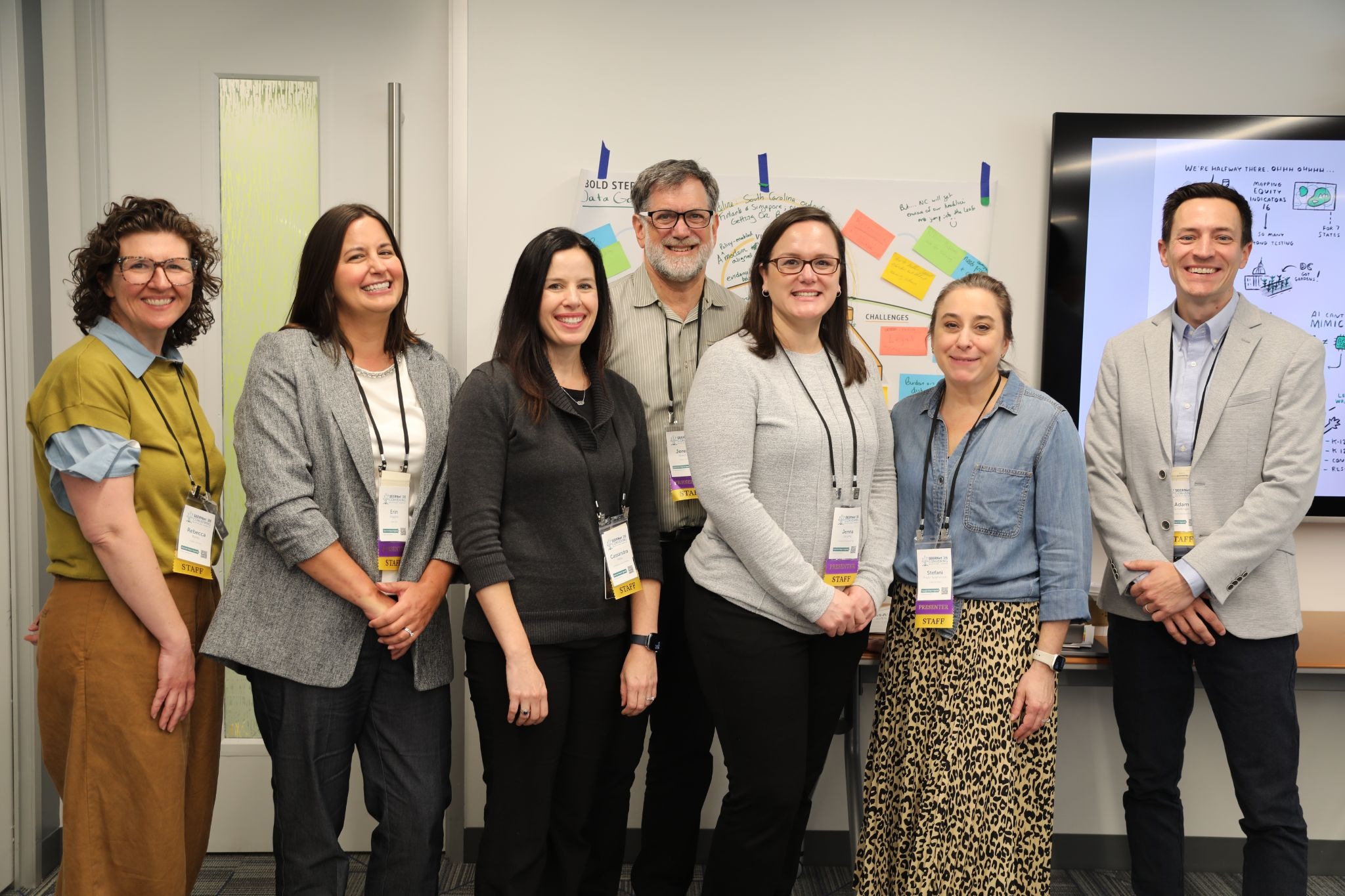
Members of the convening planning committee. We are grateful to this team and to all participants whose ideas, perspectives, and contributions made the convening a success!
 Sign Up